LIBERICA
Although most coffee aficionados are well-versed in Arabica and Robusta varieties, there exists a lesser-known third species of coffee bean: Liberica. This particular variety constitutes approximately 2% of global coffee consumption; however, most of this consumption transpires in the nation where Liberica coffee enjoys considerable popularity: the Philippines (Earl of Coffee, 2020).
Liberica, or Liberian coffee (Coffea liberica), is frequently referred to as the "third coffee crop species" (after Coffea arabica and Coffea canephora). A commonly misquoted statistic suggests that Liberica comprises approximately 1 per cent of the global coffee supply; however, the production output of this species remains minuscule when compared with that of Arabica and Robusta. Although, during the latter portion of the 19th century, Liberica was positioned alongside Arabica as the second most significant species in the coffee trade (Ralph, 2023), this status has diminished over time.
Liberica, a coffee species from Liberia (West Africa), was introduced with remarkable scale and efficiency beginning in the early 1870s. This introduction primarily responded to the devastating coffee leaf rust epidemic that severely impacted Arabica plantations in Sri Lanka. However, shortly thereafter, Liberica was utilized to expand coffee production into low-elevation tropical regions where climatic conditions-characterized by excessive heat and moisture-rendered Arabica cultivation untenable. Consequently, Liberica has cultivated a steadfast following in the Philippines, Malaysia, and Indonesia. Due to an outbreak of coffee rust disease in various regions, the Philippines emerged as one of the foremost exporters of this rare coffee species. This development was significant because Liberica effectively addressed the demand for coffee in areas where Arabica could not flourish.
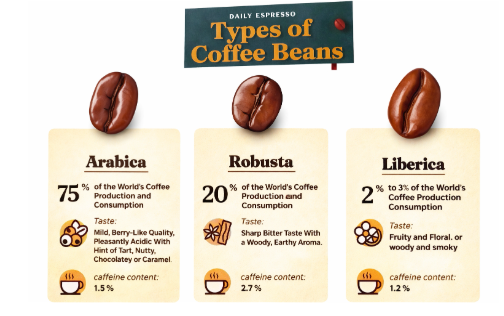
Researchers, governmental authorities, and cultivators appreciate the dimensions and vigor of Liberica. Liberica beans, which are notably larger, possess an irregular morphology in contrast to Arabica and Robusta beans. They are celebrated for their unique, smoky, and fruity profiles, often infused with subtle floral and woody undertones. Furthermore, these plants are resilient; they can endure elevated temperatures. This distinct flavor profile sets them apart from conventional coffee varieties. There exist multiple varieties of Liberica. These are:
1. Standard or Traditional Liberica
The term "Traditional" or "Standard" Liberica refers to the original and unaltered manifestation of Liberica that thrives naturally in the geographic regions of West Africa and Southeast Asia. It is, indeed, categorically distinct from its counterparts, Arabica and Robusta, particularly when considering variables such as bean size, shape, flavor profile, and resilience. The beans characteristic of Liberica are notably larger than those produced by Arabica and Robusta, presenting an asymmetrical, oval, or almond-like morphology with a pointed apex. However, its structural integrity is more pronounced, showcasing greater hardness and density; this renders the processing of such beans somewhat more arduous.
This particular variety of Liberica is indigenous to West Africa-most prominently Liberia, Nigeria, and the Ivory Coast. In contemporary times, it is also cultivated in Ghana and various Southeast Asian localities, specifically in Batangas and Cavite within the Philippines, as well as Johor in Malaysia and regions such as Borneo and Sumatra in Indonesia. It is now predominantly enjoyed within local coffee cultures and is frequently incorporated into coffee blends to augment complexity. This burgeoning interest in specialty coffee markets can be attributed to its distinctive flavor profile, creating a revival because of its unique characteristics.
2. Kapeng Barako (Barako Coffee)
TYPES OF LIBERICA
Johor Liberica
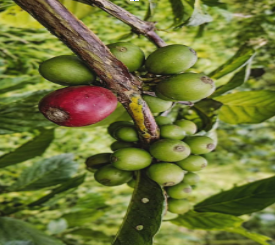
Within the bounds of Robusta and Arabica coffees, coffee lovers can compare Liberica to a mythical unicorn. Regarded as the sweetest among coffee species, it is so exceedingly rare that it has been deemed endangered; various sources contend that it comprises less than 1% of global coffee production. However, for a farm in Johor, Malaysia, Liberica coffee represents not merely a product but a way of life (Khaw, 2022).
Johor liberica represents a distinctive cultivar of Liberica coffee cultivated in Johor, Malaysia. It stands as one of the select locales across the globe that continues to engage in the commercial production of liberica. Thus, rendering it a unique and consequential coffee within the Southeast Asian context. Unlike its other liberica counterparts, Johor liberica is renowned for its smooth, nutty, and chocolatey flavor profile; this quality renders it more sophisticated than the robust and smoky Kapeng Barako hailing from the Philippines.
The dimensions of Johor Liberica beans are analogous to those of other Liberica varieties. They exhibit an asymmetrical, oval, and almond-like shape. Its coffee presents nutty and dark chocolatey notes, accompanied by floral and fruity undertones. This variety is less smoky and bitter in comparison to traditional Liberica while simultaneously offering a smoother and milder experience than the potent Kapeng Barako. However, akin to the Kapeng Barako, it has a rich aroma laced with subtle sweetness, which adds to its allure.
Johor (the premier liberica-producing region in Malaysia) contributes over 90% of the nation's coffee output; however, its significance extends beyond mere statistics. Johor liberica is rapidly gaining traction within specialty coffee circles because some roasters are keen to highlight its unique taste profile.
Borneo Liberica
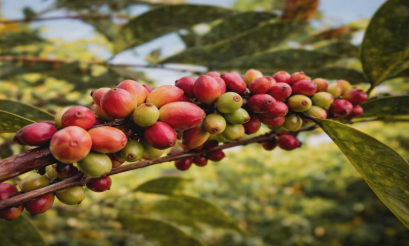
Borneo liberica represents a rare variety of liberica coffee cultivated on the island of Borneo, which is divided among Malaysia, specifically Sabah & Sarawak, Indonesia (known as Kalimantan) and Brunei. It flourishes in lowland tropical climates and is known for its mild, fruity and slightly floral flavor profile. This taste distinguishes it from the stronger and smokier Kapeng Barako and the nutty Johor Liberica. However, one must appreciate that the unique attributes of Borneo Liberica stem from its specific environmental conditions.
Borneo liberica presents a mild yet intricate flavour profile; it boasts a fruity and floral aroma, encompassing hints of tropical fruits (such as jackfruit, mango, and citrus), caramel, and subtle spices. However, it exhibits lesser smokiness and bitterness than traditional Liberica. Furthermore, this variety is characterized by a wine-like acidity reminiscent of excelsa coffee, which enhances its overall appeal-although some may find it less robust than other variants.
The arboreal species known as Bornean Liberica flourishes within the lowland, humid tropical forests of Borneo, and the beans undergo a traditional sun-drying process and are naturally processed, which improves the inherent sweetness. Bornean Liberica is frequently brewed through methods such as pour-over, drip, or espresso to accentuate its fruitiness (Ting, 2023), and the coffee roasters combine these beans with Arabica or Robusta varieties to achieve a harmonious balance of acidity and body.
Although the world does not recognize Borneo for its coffee production, small-scale farms cultivate Liberica as an integral component of local agricultural practices. To bolster their coffee industry, the Sarawak region in Malaysia and Kalimantan in Indonesia are actively promoting the production of specialty coffee, and they are beginning to acknowledge Borneo Liberica due to its distinctive flavor profile. However, this coffee variety remains a niche due to the limited international availability.
To further enhance its flavor profile and develop a singular taste distinct from other Liberica varieties, local farmers in Malaysia and Indonesia engage in experimental practices involving honey and anaerobic fermentation. Specialty coffee establishments in urban centers such as Kuala Lumpur, Jakarta, and Singapore progressively incorporate Borneo Liberica into their offer as a premium coffee selection.
Nigerian and West African Liberica
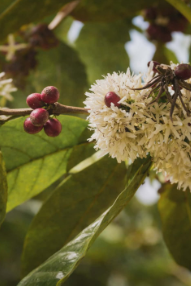
Liberica represents one of the initial coffee species cultivated within the region before its introduction to Southeast Asia in the 19th century. However, in contrast to the more ubiquitous Arabica and Robusta varieties, West African Liberica emerges as a rare and distinctive coffee cultivar characterized by a bold, woody, and subtly smoky flavor profile.
Although it is not as extensively cultivated as Robusta across Africa today, it retains significance within local coffee traditions and specialty markets. Nigerian and West African Liberica flourishes in the lowland, humid tropical climates of Nigeria, Liberia, Ghana, and Ivory Coast; farmers frequently cultivate this variety on small farms alongside additional crops, such as cocoa and plantains. The beans undergo traditional sun-drying and fermentation processes to augment their complex flavors; thus, they are brewed within local coffee customs and occasionally combined with spices or milk. This variety also pairs well with robust black coffee or espresso-style beverages.
African coffee lovers regarded Liberica, indigenous to West Africa, as a heritage crop in this region. It once served as a significant export during the colonial era; however, Robusta overcomes this variety in the landscape of African coffee production. Although coffee farmers continue to develop Nigerian Liberica on diminutive farms, primarily for local consumption and niche markets, its prominence has diminished. Furthermore, Ghana, Liberia, and the Ivory Coast contribute modest quantities of Liberica for regional utilization. This West African variety remains scarce and is not as extensively exported as its more popular counterparts, Robusta and Arabica. Some African farmers are attempting to reintroduce Liberica as a specialty coffee, primarily because of its distinctive flavour. In Europe and the United States, specialty coffee roasters are experimenting with West African Liberica, incorporating it into various blends and single-origin selections.